How to Build a Balanced Saudi Plate: The Hand Method for Kabsa, Foul and Family Meals
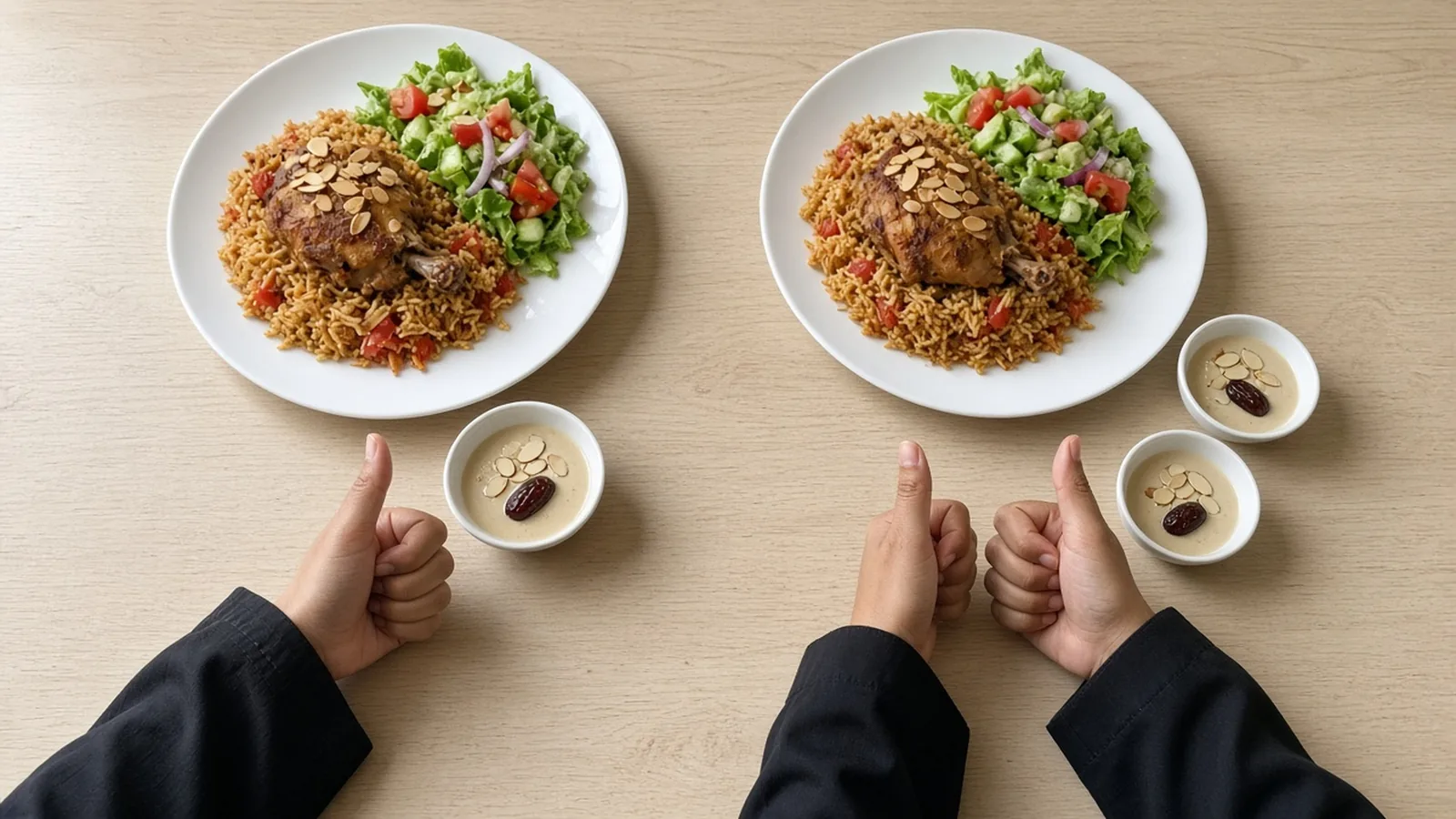
What does a balanced plate look like? Fill about half your plate with vegetables, a quarter with protein and a quarter with rice, bread or another carb, then add a little healthy fat. To size each part, use your hand: a palm of protein, a fist of vegetables, a cupped hand of carbs and a thumb of fat.
- Fill half your plate with vegetables, a quarter with protein and a quarter with rice or bread.
- Size portions with your hand: a palm of protein, a fist of vegetables, a cupped hand of carbs, a thumb of fat.
- As a starting point, many women do well with one portion of each per meal, and many men with two.
- Serve yourself rice last, after salad and protein.
- Make water your default drink.
Healthy eating doesn’t mean giving up kabsa, jareesh, foul or the dishes your family loves. It means looking at the whole plate: what’s taking up most of the space, where the vegetables are, and how much rice really needs to be there.
Knowing what to eat is only half the story. You also need to know how much. Over the years, portions have grown, and the more food on the plate, the more we tend to eat.
This guide gives you a simple method you can use anywhere, from your own kitchen to a family gathering: your hand.
Why do portions matter in the Gulf?
Meals in Saudi Arabia and the Gulf are generous and shared, and that’s part of their beauty. But big platters, second helpings offered out of hospitality, and rice at the centre of the table make it easy to eat more than you need without noticing.
Saudi Arabia has its own national eating guides, the Ministry of Health’s Healthy Food Palm and the Saudi Healthy Plate (Saudi MOH). Yet a 2023 study found most people in the Kingdom had never heard of either (BMC Public Health, 2023). The hand method turns the same ideas into something you can remember without a chart.
Only 10.2% of adults (15+) in Saudi Arabia eat the recommended five servings of fruit and vegetables a day (GASTAT, 2024). Filling half your plate with vegetables is the single biggest change most of us can make.
The hand guide to portions
The hand portion method uses your own hand to size each part of your meal, with no scales, apps or measuring cups. Your hands are in proportion to your body and they go wherever you go, which makes them perfect for eating out. It’s ideal if food-tracking apps feel like too much.


As a starting point, many women do well with one portion of each per meal, and many men with two. Your needs depend on your size, activity, age and health, so adjust to how hungry and energetic you feel.
Build your plate in 4 steps
Step 1: Start with protein
Protein builds and repairs muscle, makes enzymes and hormones, and keeps you full for longer. In many Gulf meals, rice or bread takes up most of the plate and protein comes second. Refined carbs digest quickly, which can leave you hungry again sooner. So start with your protein.
Hold up your hand. One to two palms of protein is one serving.
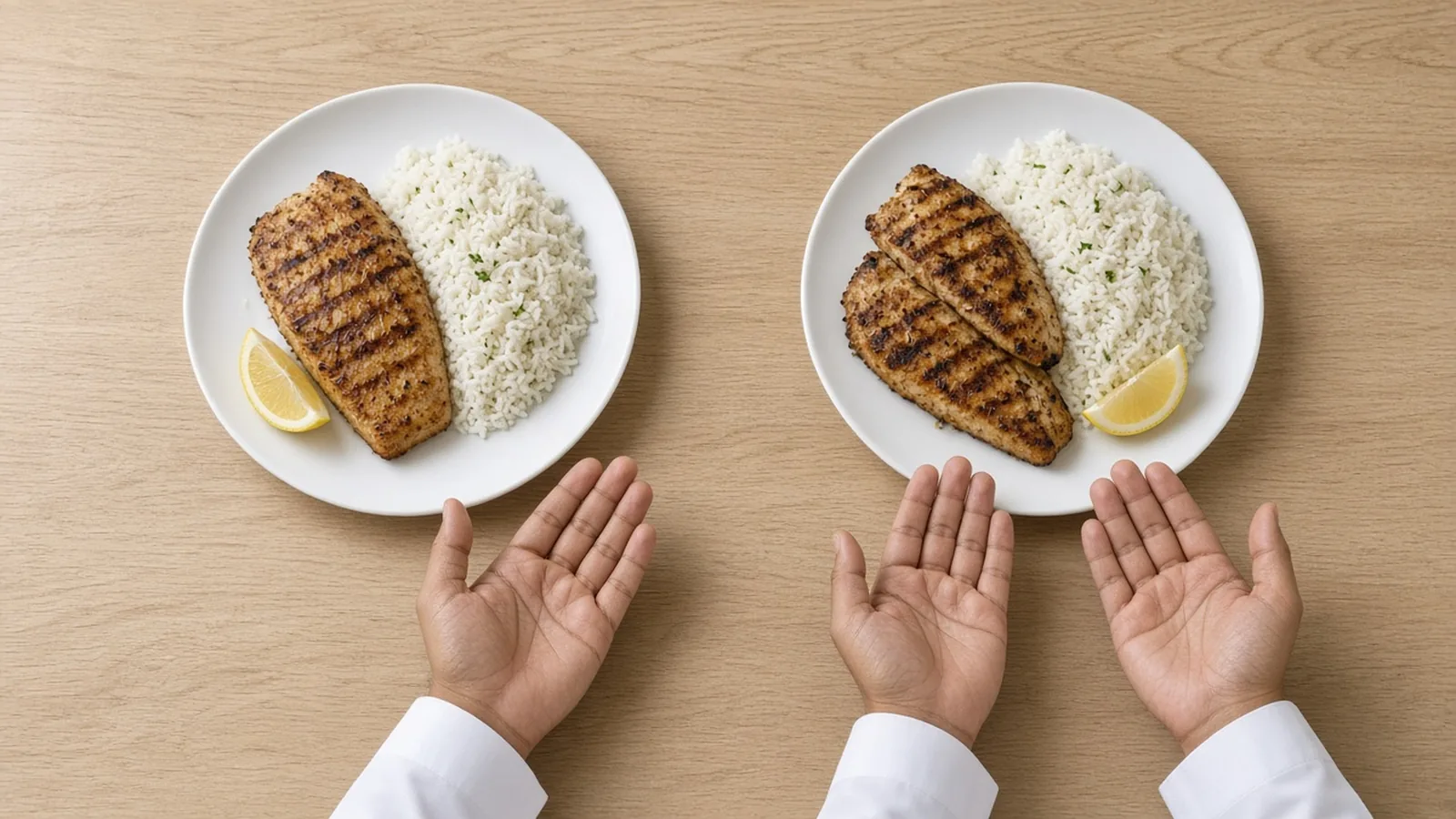
Left: one palm. Right: two palms.
Step 2: Fill half the plate with vegetables
We all know vegetables and fruit matter, but why? They give you vitamins, minerals, antioxidants and fibre, which support your energy, immunity, digestion and overall health. Fibre also feeds your gut bacteria, which is part of the gut-brain connection.
Aim for one to two fists of vegetables, filling about half your plate.
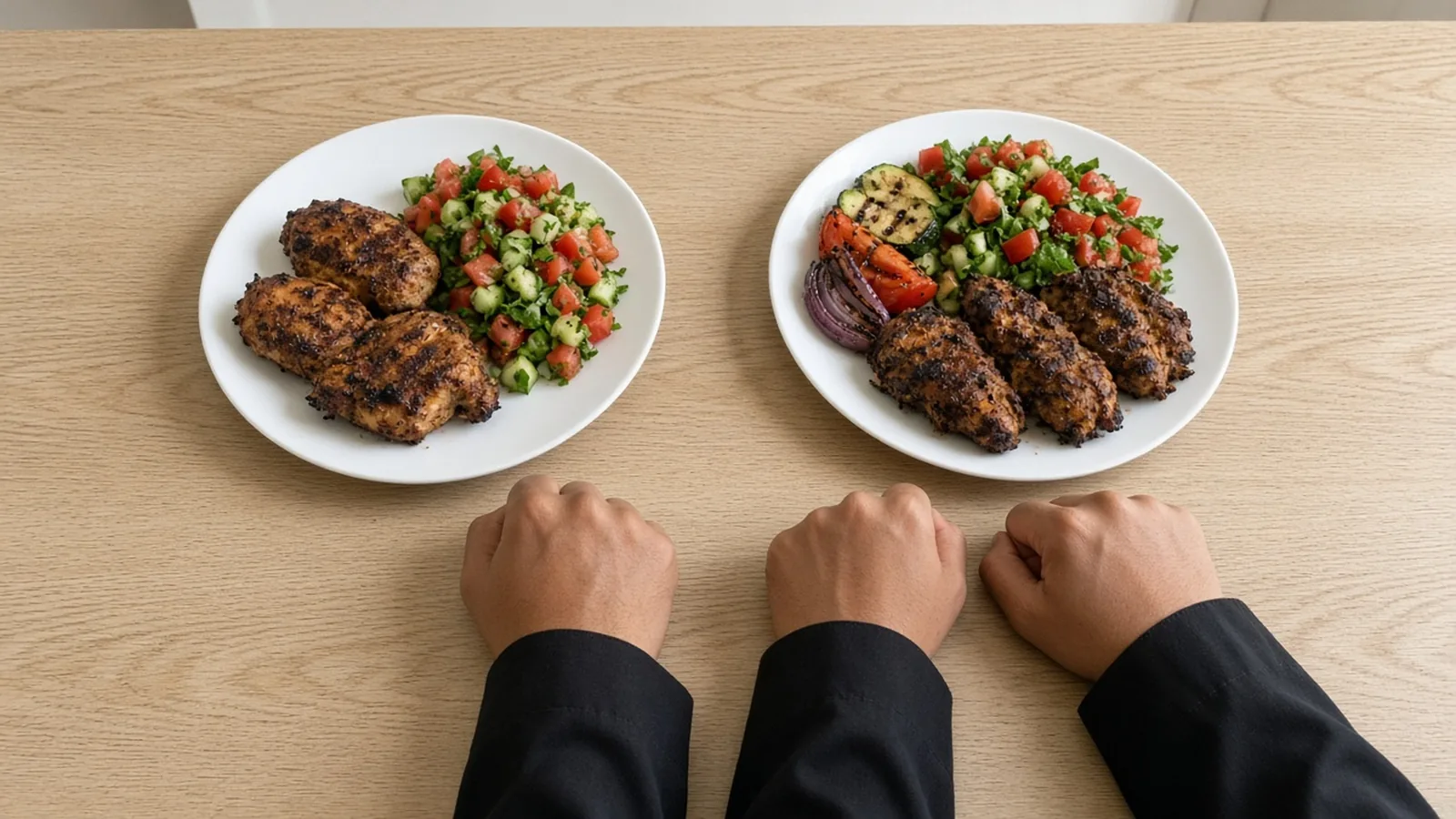
Left: one fist. Right: two fists.
Step 3: Add your carbs last
Carbs aren’t “bad” when the portion is right. But one proper serving of rice or bread often comes as a surprise, because it’s smaller than most of us think. That’s why carbs go on the plate last, once your protein and vegetables are in place.
Aim for one to two cupped hands, and choose higher-fibre options more often.
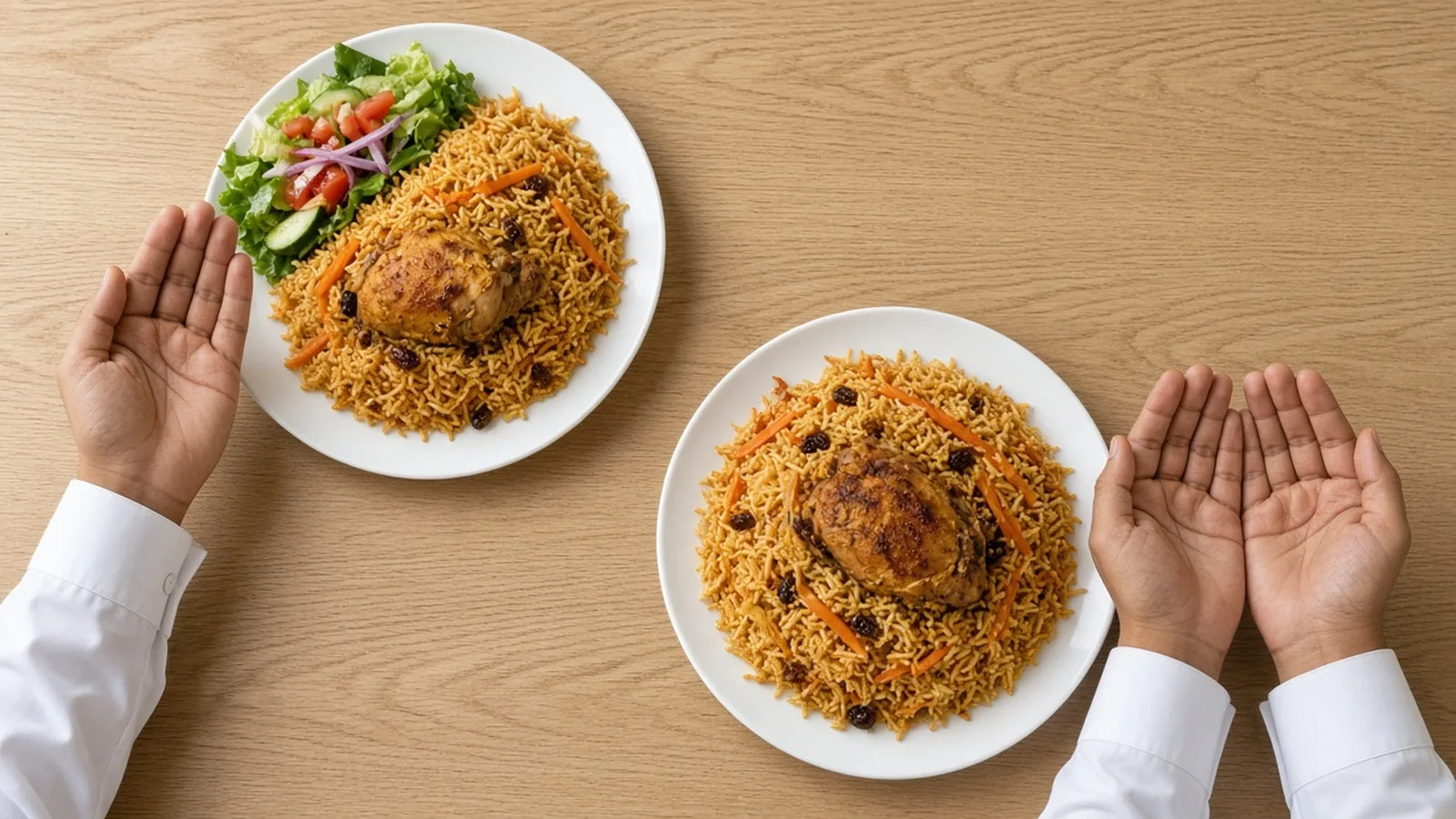
Left: one cupped hand. Right: two cupped hands.
Step 4: Finish with a little healthy fat
Fat isn’t the enemy. Your body needs it to absorb vitamins A, D, E and K, make hormones and protect your cells. The aim is to choose mostly unsaturated fats and keep portions small, because fat is energy-dense.
Use one to two thumbs of fat per meal.
Left: one thumb. Right: two thumbs.
Protein first, vegetables next, rice last.
How to balance Gulf favourites
You don’t need new recipes to eat well. Here’s how to use the hand method with dishes you already love.

| Dish | Easy swap |
|---|---|
| Kabsa and machboos | Take a palm or two of chicken or fish and a big side of salad, then add a cupped hand of rice. Serve the broth on the side and go easy on extra ghee. |
| Jareesh and harees | These grain dishes are your carb. Add laban or grilled chicken for protein and a fresh salad, rather than extra bread or fried sides. |
| Foul, hummus and fatteh | Beans and chickpeas give you protein and fibre. Add cucumber, tomato and herbs for crunch, keep bread to a cupped hand, and use a thumb of olive oil or tahini. |
| Mixed grill | Keep the grilled meat and swap most of the fries for grilled vegetables or salad. Choose water or sparkling water over a sugary drink. |
| Breakfast with eggs, cheese or labneh | Pair eggs or labneh with tomatoes, cucumber and olives, plus one piece of whole-grain bread, instead of sweet pastries. Or try our Black Bean Feta Omelet (in the app): eggs and beans for protein, fresh tomato salsa and a thumb of avocado. That’s a balanced plate in 25 minutes. |
| Fried chicken and nuggets | Try our Baked Quinoa Chicken Nuggets (in the app). That’s a palm of protein with a crispy whole-grain coating, baked not fried. |
And for drinks, make water your default. Soft drinks, sweetened iced coffees and juice drinks add a lot of sugar without filling you up. Fruit is more filling than juice because it keeps its fibre. For more on this, read our guide to ultra-processed food in the Gulf.
Restaurants, buffets and family gatherings

When you’re eating out or visiting family, ask yourself three quick questions:
- Where are the vegetables? Look for salad, grilled vegetables, soup or a vegetable side, and fill half your plate.
- What’s my protein? Choose fish, chicken, eggs, beans or a leaner meat, about a palm or two.
- Which one carb do I really want? Rice, bread, potatoes or pasta. Pick one and enjoy it, instead of having all of them together.
At a buffet, look at everything before you serve yourself, start with a smaller plate, and only go back if you’re still hungry. And when a generous host keeps offering more, a polite “I’ll start with a little, thank you” lets you accept their hospitality on your own terms. For more on this, see our post on mindful eating habits.
A one-day example using familiar foods
This is an example, not a personal meal plan.
| Meal | What’s on the plate |
|---|---|
| Breakfast | Eggs with tomatoes and cucumber, or our Black Bean Feta Omelet, with one piece of whole-grain bread and unsweetened tea |
| Lunch | Chicken kabsa: two palms of chicken, a big salad, one cupped hand of rice, and water |
| Snack | 2–3 dates with a small handful of unsalted nuts, or fruit with plain yoghurt |
| Dinner | Foul or lentil soup with vegetables and bread, or grilled fish with vegetables and bulgur |
| Treat | A small dessert at a gathering, enjoyed slowly |
- Add one fist of vegetables to a meal you already eat.
- Make water your default drink at one meal each day.
- Serve yourself rice last, and check it’s one or two cupped hands.
FAQ
Do I have to stop eating rice or bread to eat healthily?
No. Rice and bread can be part of a balanced diet. Keep the portion to about one or two cupped hands, and fill the rest of the plate with vegetables and protein.
Is traditional Saudi or Gulf food unhealthy?
No. Gulf cuisine includes vegetables, legumes, yoghurt, fish and spices. Some recipes and portions are high in oil, salt or rice, so look at the whole plate and make small adjustments rather than judging the cuisine.
How accurate is the hand portion method?
It’s an estimate, not a precise measure. Because your hands are in proportion to your body, it gives you a practical starting point you can use anywhere, including at restaurants and family gatherings.
How much rice should I eat per meal?
About one cupped hand of cooked rice per meal for many women and up to two for many men, adjusted for your size, activity and hunger. Fill the rest of the plate with vegetables and protein.
Are dates healthy?
Dates provide fibre, potassium and natural sugars. Enjoy two or three as part of a meal or snack. People managing diabetes should follow advice from their healthcare professional.
Can this guide help with diabetes, high blood pressure or weight loss?
It offers general education only. People with diabetes, kidney disease, high blood pressure, pregnancy-related needs or a history of disordered eating may need personalised advice from a qualified healthcare professional.
The bottom line
A balanced plate is simple: protein first, vegetables filling half, carbs last, and a little healthy fat, all sized with your own hand. You can use it with the food you already love, at home, at work or at a family feast.
One balanced meal won’t change everything, and one big gathering won’t undo it. It’s what you do most days that counts.
Not sure what to cook tonight?
Open Byondbites and ask Ayra for a balanced dinner using what’s in your fridge.
Available on the App Store and Google Play
Sources and further reading
- Saudi Ministry of Health (2012). Dietary Guidelines for Saudis: The Healthy Food Palm. moh.gov.sa
- BMC Public Health (2023). Awareness, knowledge and usability of the Healthy Food Palm and the Saudi Healthy Plate. bmcpublichealth.biomedcentral.com
- General Authority for Statistics (GASTAT). Health Determinants Statistics Publication 2024. stats.gov.sa
- World Health Organization. Healthy diet. Fact sheet. who.int
- Harvard T.H. Chan School of Public Health. Healthy Eating Plate. The Nutrition Source. hsph.harvard.edu
- Precision Nutrition. Calorie control guide: the hand portion method. precisionnutrition.com