
Food & Mood
The Gut-Brain Connection: How What You Eat Shapes Your Mood
 By Sehrish Khandia, Certified Nutritionist5 min read
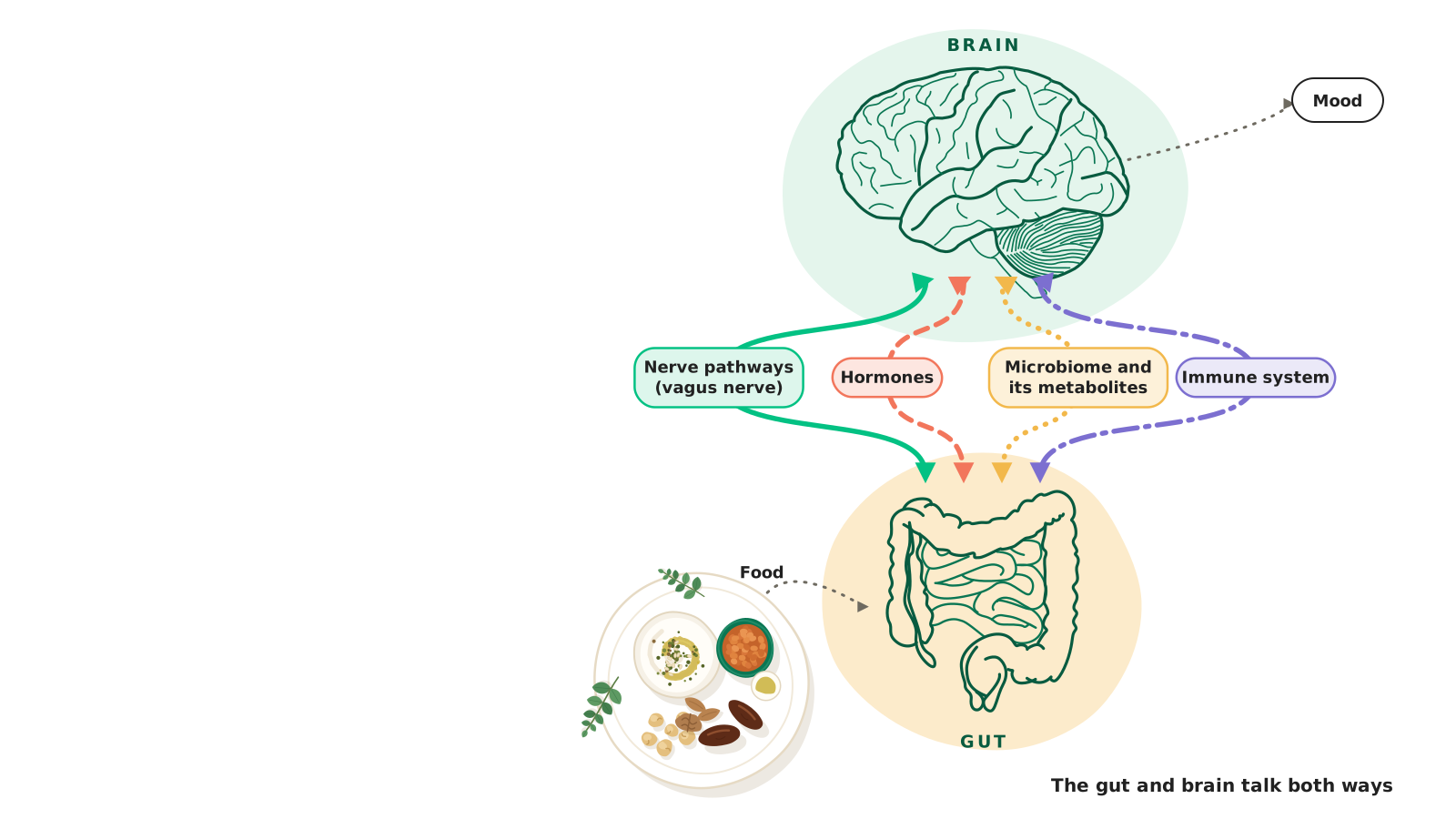
If you’ve ever felt “butterflies” before a big meeting, or noticed your digestion tighten when you’re stressed, you’ve already experienced the gut-brain connection. It isn’t a metaphor. Your gut and your brain are in constant conversation — through nerves, hormones, immune signals and the trillions of microbes that live in your digestive tract.
The idea is simple and hopeful: better everyday food decisions can support both how you feel in your body and how you feel in your mind. Better decisions, not more ingredients. Here is what the science actually says (without hype), which Saudi and Middle Eastern foods fit a gut- and mood-friendly plate, and how to start this week.
What is the gut-brain connection?
Harvard Health describes it as a two-way street: a troubled brain can send signals that upset the gut, and a troubled gut can send signals that affect mood, stress and anxiety. That is why digestive symptoms can show up during stressful periods — and why ongoing discomfort can make stress harder to shake.
Cleveland Clinic explains the key players:
- The enteric nervous systema “second brain” with hundreds of millions of nerve cells in the gut
- The vagus nervethe main information highway between gut and brain
- The gut microbiomemicrobes that help produce or influence chemical messengers involved in mood and stress
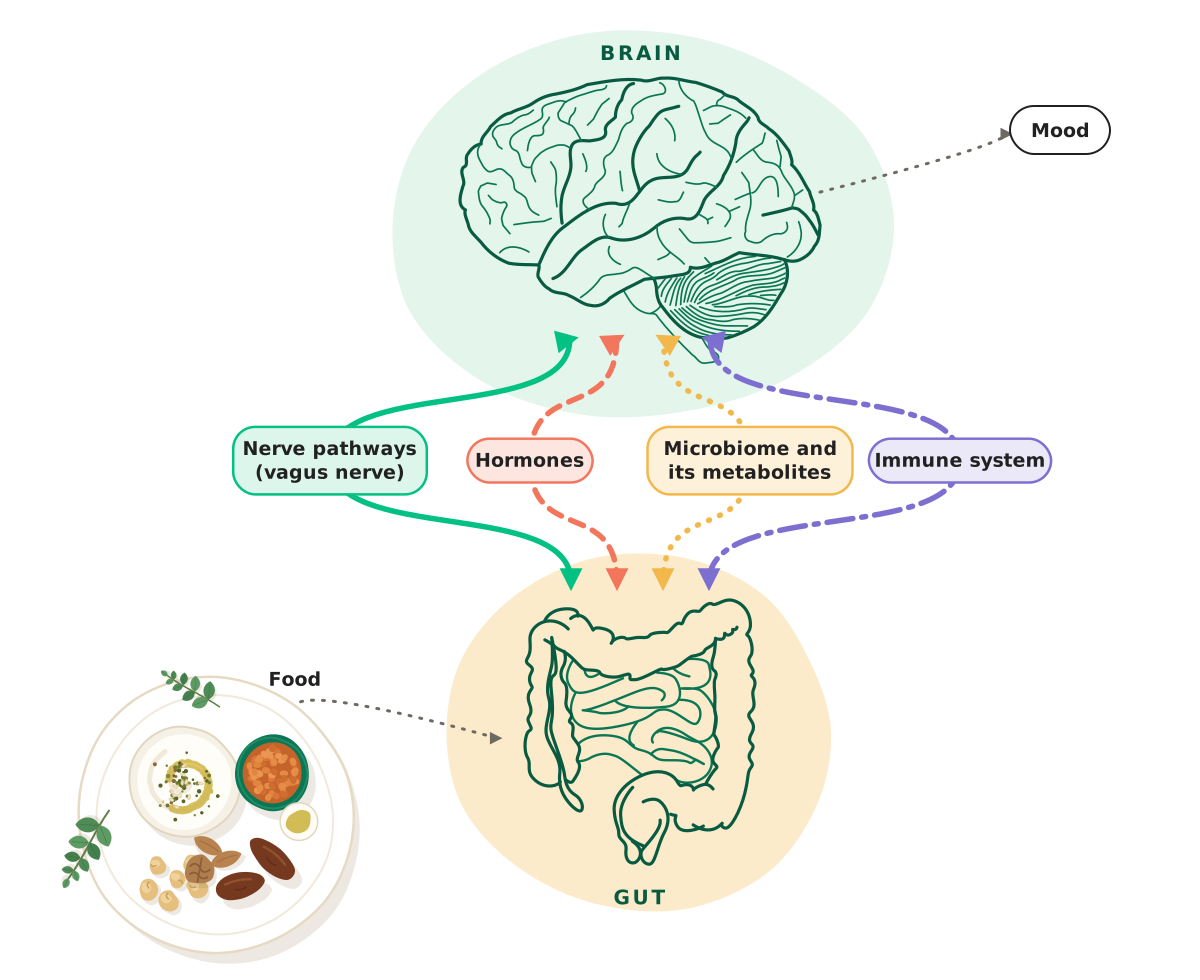
The gut and brain talk both ways
- Nerve pathways (vagus nerve)
- Hormones
- Microbiome and its metabolites
- Immune system
Line drawing of a brain at the top and the intestines at the bottom, linked by four two-way arrows labelled Nerve pathways (vagus nerve), Hormones, Microbiome and its metabolites, and Immune system. A plate of laban with olive oil, lentils, chickpeas, dates and nuts points into the gut, and an arrow from the brain points to the word Mood. Caption: The gut and brain talk both ways.
How diet talks to your mood
Three practical pathways matter most for everyday eating:
- Fibre feeds helpful microbes
- Fermented foods and “psychobiotics”
- Ultra-processed foods and depression risk
Fibre feeds helpful microbes
Fibre from lentils, chickpeas, vegetables, whole grains and dates is fermented by gut bacteria into short-chain fatty acids, which may support the gut barrier, influence inflammation and play a role in mood-related pathways.
Fermented foods and “psychobiotics”
“Psychobiotics” are microbes (and related foods) that may influence mental health via the gut–brain axis. A 2025 review describes possible mechanisms, including serotonin and GABA modulation, reduced inflammation and effects on the stress (HPA) axis. Yoghurt, laban and live-fermented pickles sit in this conversation (check the label for live cultures: many shop-bought pickles are vinegar-based, and they can be salty). Evidence in humans is promising but still mixed — so think support, not cure.
A 2026 review of six trials of probiotics in unmedicated adults with depression found a small average improvement in depressive symptoms. Most of the trials were industry-funded, and the result is less certain without them. Probiotics are not a replacement for clinical care.
Ultra-processed foods and depression risk
A 2025 systematic review of nine observational studies (79,701 adults) found that higher ultra-processed food (UPF) intake has been linked with a higher risk of depressive symptoms. This is an association and doesn’t prove cause. Proposed mechanisms include gut dysbiosis, inflammation and disrupted neurotransmission. None of this means every packaged snack is “bad.” It does mean shifting the balance of the plate toward whole and minimally processed foods is a sensible, well-supported place to start.
Why this matters in Saudi Arabia and the GCC
Saudi and Middle Eastern food culture already holds many of the ingredients researchers highlight: laban and yoghurt, dates, lentils and chickpeas, olive oil, za’atar and herbs. The opportunity is not to import a new diet, but to personalise what is already familiar. That is where Ayra and scanning your fridge help: they meet you in your real kitchen, not an idealised meal plan.
What to eat this week (Saudi- and GCC-friendly)
A flexible list, not a rigid protocol:
Laban or plain yoghurt
a daily fermented option if dairy suits you; unsweetened where possible.
Dates
one or two with nuts instead of a sweet packaged bar.
Lentils
dal, soups or salads; excellent plant fibre.
Chickpeas
hummus, warm stews or roasted snacks.
Extra-virgin olive oil
for cooking and finishing.
Za’atar and fresh herbs
flavour for vegetable-forward plates.
Leafy salads and cooked vegetables
aim for colour and variety.
Whole grains
brown rice, freekeh, oats.
A live-fermented pickle or side
check the label for live cultures (many shop-bought pickles are vinegar-based), go easy on the salt, and only if it fits your digestion and taste.
Water and movement
hydration and light activity support digestion and stress regulation.
Practical habits that support the gut-brain axis
- Eat regularly enough that stress does not push you into chaotic grazing.
- Build one fibre-rich meal a day you can repeat (lentil soup, chickpea salad, yoghurt bowl).
- Notice the loop: stress → gut symptoms → more stress. Walks, breathing and earlier screens-off help the same axis diet does.
- Plan, not perfection. Byondbites' Health Mode gives you a personal calorie plan for weight loss, and its recipes show calories per portion.
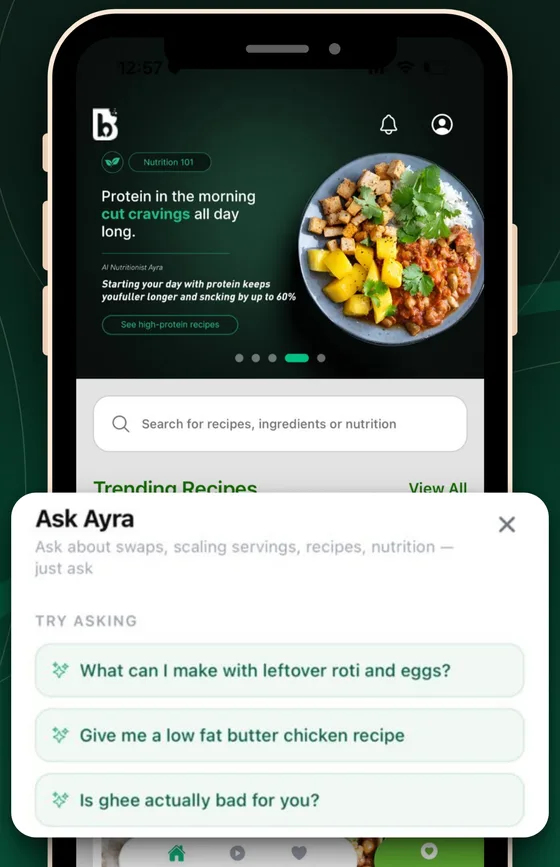
- Ayra can help when you are stuck: try “What can I cook tonight using yoghurt, lentils and vegetables?”
FAQ
Does gut health really affect anxiety and mood?
Research suggests the gut and brain communicate in both directions, through nerves (including the vagus nerve), immune signals and microbial metabolites. Harvard Health and Cleveland Clinic both describe this as a real physiological link. Diet is one influence among many; it does not replace therapy or medical treatment.
Which foods are best for the gut-brain connection?
A pattern rich in fibre (pulses, vegetables, whole grains, dates), fermented foods you tolerate and olive-oil-forward cooking, with fewer ultra-processed products, aligns with current evidence. Individual tolerance varies, especially with FODMAPs, lactose or IBS.
Can probiotics replace treatment for depression?
No. A 2026 review found only a small average improvement for probiotics in unmedicated depression, and the result is less certain once industry-funded trials are set aside. Food and probiotics may support wellbeing; they are not a substitute for professional mental health care.
How can Byondbites help with food and mood?
Ayra gives AI guidance on Saudi dishes, swaps and portions. Scan your fridge to get meals from what you already have, and use Health Mode for a personal calorie plan for weight loss. Recipes show calories per portion.
A soft next step
Open Byondbites and let Ayra suggest fibre-rich meals using foods you already buy — or scan your fridge to see what you can cook. Small, repeated decisions compound.
Available on the App Store and Google Play
Sources
- Harvard Health Publishing. The gut-brain connection. health.harvard.edu
- Cleveland Clinic. What Is the Gut-Brain Connection? my.clevelandclinic.org
- Liu et al. (2026). Efficacy of probiotic intervention in unmedicated depression: a systematic review and meta-analysis. Frontiers in Psychiatry. frontiersin.org
- Karim, Alam & Syed (2025). Association Between Ultra-Processed Food Consumption and Risk of Developing Depression in Adults: A Systematic Review. EMJ Gastroenterology. emjreviews.com
- Shawky, Surendran & Abu El-Khair (2025). Fermented Vegetables as a Source of Psychobiotics. Probiotics and Antimicrobial Proteins. link.springer.com