How to Make Recipes from Ingredients at Home: Cook Dinner from What's Already in Your Kitchen
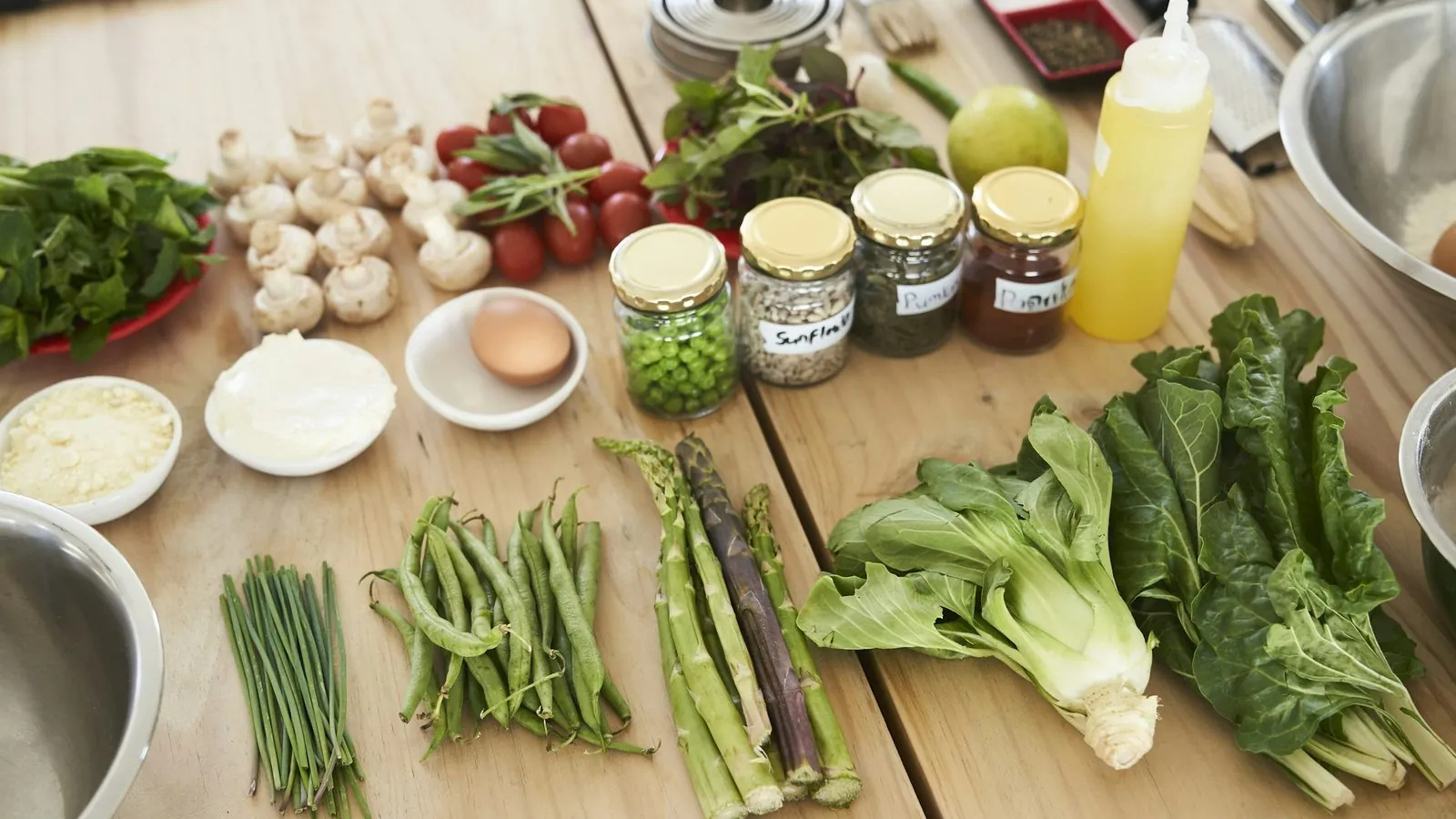
Photo by Gareth Hubbard on Unsplash
Start with whatever needs using up. Pick one protein, add the vegetables you have and choose one base, like rice, bread, a grain or potatoes. Then cook it in a format you already know: a saloona, an egg pan, a one-pot grain, a soup or a tray bake. Onion, garlic, tomato, baharat, loomi and lemon will make most combinations taste like home.
- Look for what needs using first, before you decide what to cook.
- One protein, some vegetables and one base is enough for a meal.
- Don't hunt for a recipe that matches your fridge. Pick a format you know.
- Keep a small "always a meal" pantry.
- Leftovers are fine if they were stored well and reheated until piping hot.
It's 7 pm. In the fridge: two tomatoes, half a bag of spinach, a few eggs, an onion, some laban and last night's rice in a container. "There's nothing to cook," you think. Then you reach for the delivery app.
Most of us know that moment. As a nutritionist and a working mum, I can tell you there's almost always a meal in that fridge. What's missing isn't a recipe book. It's a way of looking at what you've got.
That's what this post is. It's also the thinking behind the ingredient scanner we built into Byondbites.
Why it's worth it
It saves money and time, and it gives you control over the oil, salt and sugar in your food. It matters nationally, too.
A nationwide study by the Saudi Grains Organization, announced by the Ministry of Environment, Water and Agriculture, found that more than 33% of food in Saudi Arabia is wasted, at a cost of about SAR 40 billion a year. It estimated each person wastes 184 kg of food a year. Bread and rice were among the biggest losses.
Every dinner you make from what's already at home keeps a little of that out of the bin.

First, the two-minute check
Before you choose a dish, open the fridge and look for what won't last. Soft tomatoes, wilting spinach or herbs, a courgette going bendy. An opened tub of laban or labneh. Yesterday's rice or grilled chicken. Bread that's starting to go stale, which is perfect for toasting or fatteh.
Move those to the front. Tonight's meal gets built around them.
Honestly, this one habit does more for food waste than any shopping trick I know.
Then build the meal
Pick one protein
Protein is what makes a meal feel like dinner rather than a snack. Eggs are the fastest there is. Chicken, meat or fish work fresh, frozen or already cooked. Canned tuna and sardines count. So do lentils, chickpeas, foul and white beans, from a can or cooked from dry. Laban, yoghurt, labneh and white cheese can carry a light dinner too.
Not much of anything? Combine two. Eggs with white cheese. Lentils with yoghurt on the side.
Add the vegetables you have
Almost any vegetable works in almost any of the formats below. Keep onions and tomatoes in all the time; so many Gulf dishes start with them. Frozen peas, okra, spinach and mixed vegetables count as well, and they don't go off by Thursday.
Choose one base
Rice, bread, freekeh, bulgur, jareesh, pasta, potatoes or oats. Choose the one that needs using, or the one your family will actually eat tonight. One is enough. (For portion sizes, the balanced Saudi plate guide covers it, so I won't repeat it here.)

Cook it in a format you know
This is the step that turns random ingredients into an actual recipe. Instead of searching for a dish that uses exactly what you have, pick a format you already cook and drop your ingredients into it.
The saloona pot
Soften onion and garlic in a little oil, add tomato and a spoon of baharat (or cumin, coriander and turmeric), then your vegetables, your protein and some water or stock. Simmer until everything's tender. Chicken, lamb, fish, chickpeas and lentils all work. Serve with rice or bread.
The egg pan
Cook onion, tomato and peppers until soft. Make small wells, crack in the eggs, cover and let them set. Spinach, leftover potato, white cheese or a few spoons of foul make it different every time. It works for breakfast, lunch or dinner.
The one-pot grain
Toast rice, freekeh or bulgur in a little oil with onion and spices. Add vegetables and protein, cover with water or stock, and cook until it's absorbed. A loomi, a few cardamom pods or a pinch of saffron and it tastes like a weekend dish on a Tuesday.
The soup
Lentils, oats, vegetables or a bit of chicken, simmered with onion, cumin and lemon. Soup forgives almost anything, and it stretches a small amount of protein across the whole family.
The tray bake
Vegetables and chicken pieces (or chickpeas) tossed with a little oil, garlic, lemon and spices, roasted on one tray. Very little washing up.
The fatteh-style plate
Toasted stale bread layered with chickpeas or chicken, chopped vegetables and a yoghurt-garlic or tahini sauce. It uses up bread and soft vegetables in one go.
You don't need the perfect recipe. You need a format you already know.

A small flavour toolkit
You don't need a cupboard full of jars. A few staples go a long way.
| Flavour staple | Where it works |
|---|---|
| Onion, garlic and tomato | The base for saloona, egg pans and one-pot grains |
| Baharat or kabsa spice | Rice dishes, stews, tray bakes |
| Loomi (dried lime) | Rice, soups and stews, for a sharp, sour note |
| Cumin and coriander | Lentils, beans, foul, soups |
| Cardamom and saffron | Rice and festive dishes |
| Lemon and fresh herbs | Added at the end to salads, soups and grilled food |
| Yoghurt, laban or tahini | Quick sauces and dips |
A word on salt. Stock cubes, spice mixes and cheese are often salty already, so taste before you add more. The WHO recommends adults keep salt under 5 g a day.
Back to that 7 pm fridge
Tomatoes, spinach, eggs, an onion, laban and last night's rice. Here's what I'd make.
An egg pan: onion, tomato and spinach with the eggs cracked in and a pinch of cumin, with toasted bread and a glass of laban.
Or a quick egg rice. Reheat the rice thoroughly in a pan with the onion, tomato and spinach, then fold in scrambled egg. Yoghurt on the side.
And if there were lentils in the cupboard, onion, tomato, lentils and spinach would make a filling soup in about half an hour.
No shopping. And the spinach doesn't end up in the bin.
The "always a meal" pantry
In the cupboard, I'd keep rice, freekeh or bulgur, oats, dried lentils, canned chickpeas and foul, canned tuna, tomato paste, olive oil and the spices you use most.
In the fridge: eggs, laban or yoghurt, white cheese, onions, garlic and lemons.
In the freezer: chicken pieces, fish fillets, frozen spinach, peas, okra, mixed vegetables and a bag of bread.
With those in, you'll rarely be stuck.
Let your phone do the first draft
This is exactly why the ingredient scanner exists in Byondbites. Scan what's in your fridge or cupboard and the app suggests recipes tailored to your profile and the cuisines you like, from Saudi and Khaleeji to Levantine and South Asian.
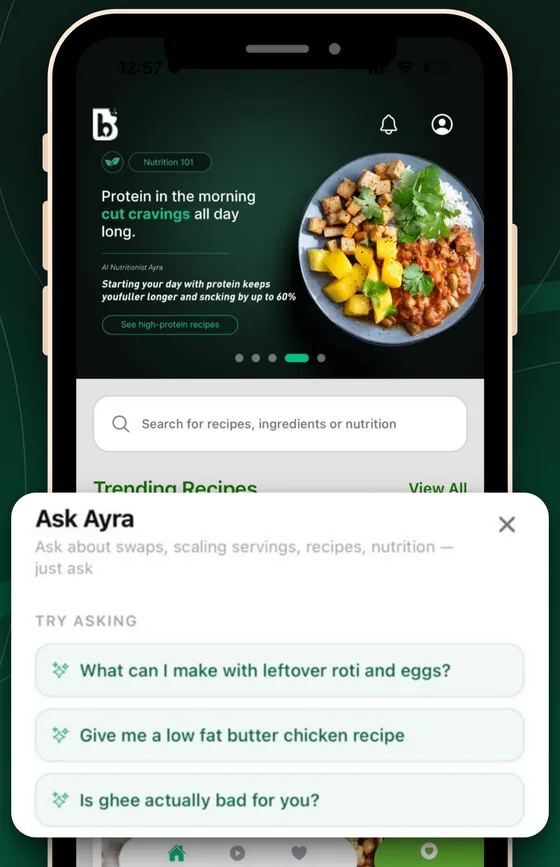
Missing an ingredient, or want a lighter version? Ask Ayra (آيرا), our in-app assistant. You can also browse more than 500 recipes I've created. And if you loved a dish at a restaurant, scan it to get a recipe you can cook at home. Recipes in the app are free.
FAQ
How do I make a recipe from random ingredients?
Pick one protein, add the vegetables you have and choose one base like rice or bread. Then cook it in a format you know: a saloona, an egg pan, a one-pot grain, a soup or a tray bake.
What should I always keep at home to cook quickly?
Eggs, onions, tomatoes or tomato paste, rice or another grain, canned chickpeas or lentils, canned tuna, laban or yoghurt, frozen vegetables and a few spices like baharat and cumin.
Is it healthy to cook from leftovers?
Yes, if they were stored well. Refrigerate cooked food promptly, use it within a few days, and reheat it until it's hot all the way through.
How can I make family favourites lighter with what I have?
Measure oil and ghee with a spoon, add an extra vegetable to the pot, and taste before you salt. In Byondbites you can ask Ayra for a lighter version of a family dish.
What if my family is fussy?
Stay with formats they already like. If they love kabsa, a one-pot rice with whatever vegetables you have will feel familiar.
The bottom line
A protein, some vegetables, one base and a format you know. Start with what needs using first, lean on a few Gulf flavours, and dinner is usually already in your kitchen.
Try it tonight
Scan your fridge in Byondbites and see what it suggests. If you'd like help planning meals around your family's needs, book a free 30-minute consultation with me.
Available on the App Store and Google Play
Sources and further reading
- Ministry of Environment, Water and Agriculture (2020). Food waste costs Saudi Arabia SR40 billion annually. mewa.gov.sa
- World Health Organization. Five keys to safer food. who.int
- FoodSafety.gov (US Department of Health and Human Services). Cold food storage chart. foodsafety.gov
- USDA Food Safety and Inspection Service. Leftovers and food safety. fsis.usda.gov
- World Health Organization. Salt reduction. Fact sheet. who.int